
The Last Days and Afterlife of the San Nicolás Mine

In Asturias, Spain, coal is no longer king, and a region is being reinvented.
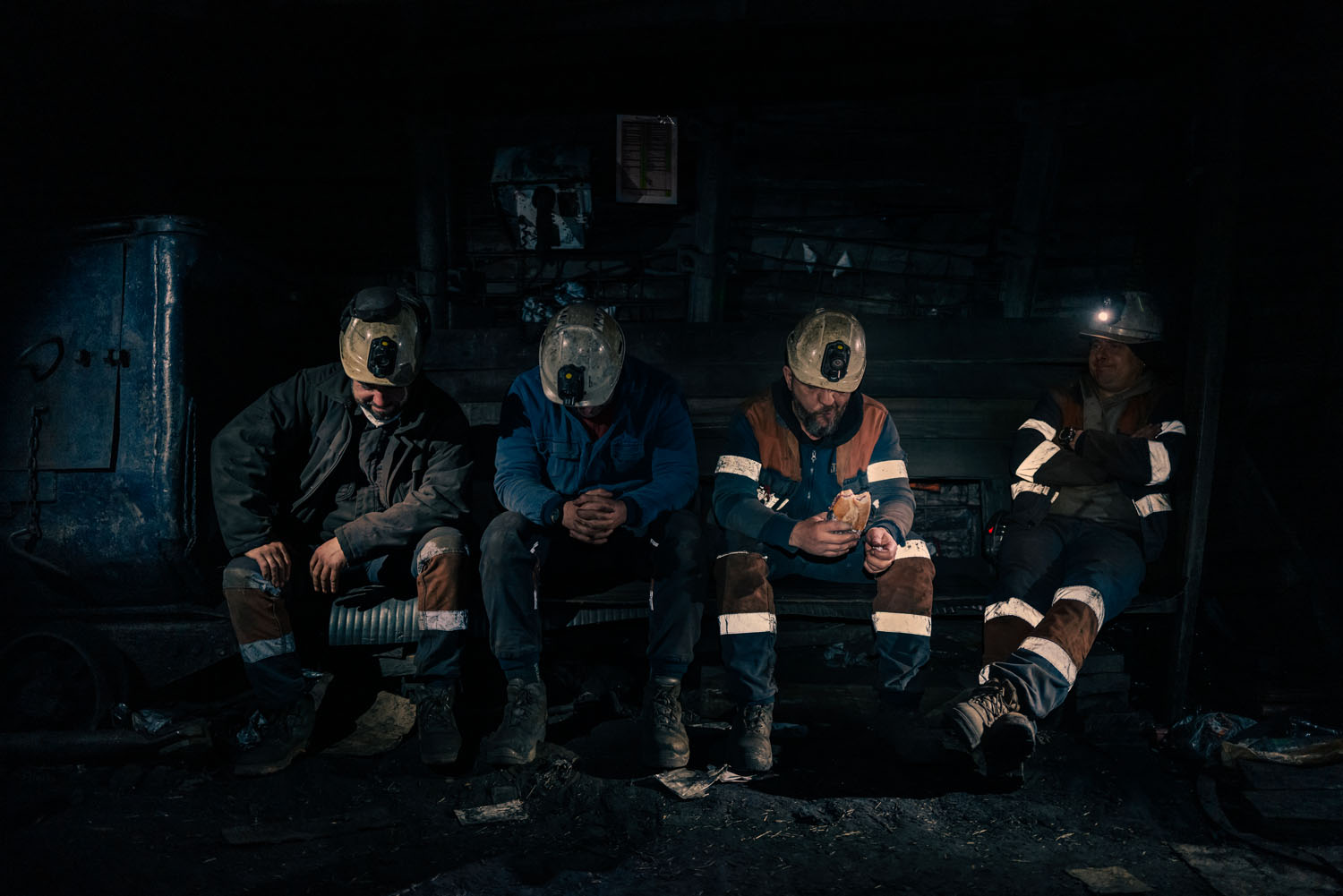
4 men sitting on a bench in uniform in a dark cave
Miners on break during a seven-hour shift, more than a quarter mile deep inside the San Nicolás coal mine. Mieres, Spain, February 2022.

This project was supported by a grant from the National Geographic Society.

Image
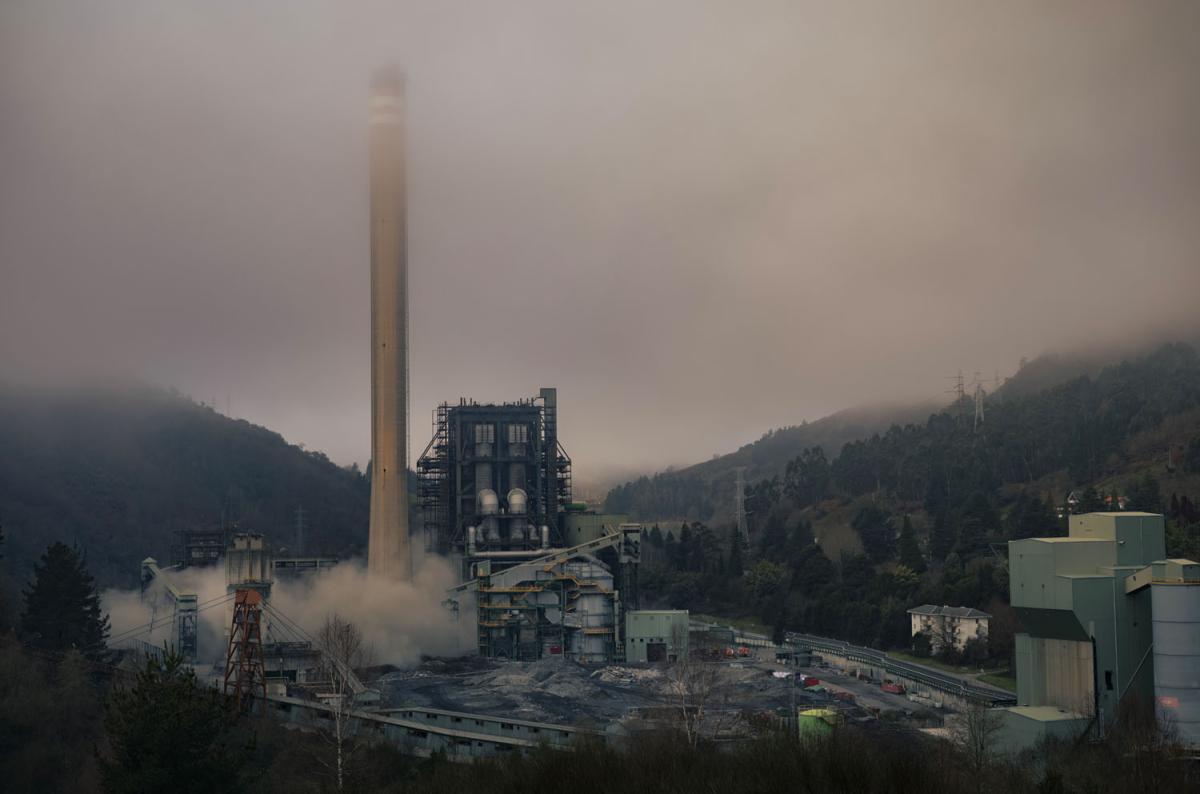
explosion at an industrial facilty, mountains in the background
A controlled demolition at the Narcea Thermal Power Plant in Soto de la Barca. The demolition was part of the of the decommissioning process of the Naturgy-owned facility, which symbolized the end of the coal era in Asturias. Soto de la Barca, Asturias, February 2024.

In 2010, the Spanish government came to an agreement with the European Union that formalized what was already a deep, generational shift in the country’s relationship to coal, a resource that had profoundly shaped the economy and culture of the northern principalities. In accordance with that agreement, Spain would shutter any remaining state-subsidized, uncompetitive coal mines by the end of 2018, thus accelerating the country’s shift toward cleaner energy and a brave new economy. Spanish coal by then was more of an industrial tradition than a major economic force, with the country importing more than 90 percent of its coal used for energy—a far cry from the industry’s heyday in the 1950s and ’60s, when it employed more than 100,000 miners across the country. By 2020, when photographer Lys Arango began documenting coal’s last chapter, that number had winnowed to fewer than three hundred, all working at the country’s last active mine.
Image
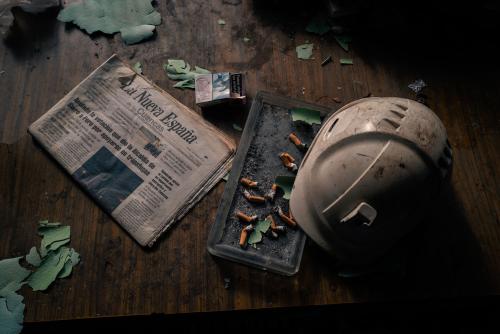
desk scene with a newspaper, hard hat, and ash tray with a dozen smoked cigarrettes
The offices of the Candín mine, closed since 2013. Langreo, Asturias, November 2020.

Arango’s grandparents had settled in the northwestern region of Asturias when coal was king. Her father grew up in the town of La Felguera and eventually moved to metropolitan Madrid to raise a family. He often told his children stories of the strangely idyllic countryside of his boyhood, set against mountains and valleys permeated by the sights and sounds of coal’s extraction. To a child in Madrid, these stories had a fantastical quality. “He described a world of green mountains and narrow valleys, where the river ran black and the town awoke to the siren—the turullu— announcing the descent of workers into the Earth’s interior.”

The future of the coal industry was a political flashpoint when Arango was a journalism intern in 2012. That summer, the Asturian miners’ strike led to intense clashes with police, along with the blockage of several dozen roads and even train lines. There was, too, an outpouring of public support as thousands gathered to greet a group of more than two hundred miners who had embarked on a twenty-day march to Madrid. It was during this turbulent summer that Arango began to look for ways to document the aftershocks of coal’s absence. As with many industries, coal was more than just a resource; it embodied a culture and a political tradition. And yet its end was inevitable. The future belonged to new industries—and by extension, new ways of life.

The San Nicolás mine, located in the same Asturian basin where Arango’s father grew up, was the last to go, the last three hundred miners pushed into unpredictable futures. Arango headed there in October 2020 to document what this transition would look like, and what Asturians had to say about it, capturing the vestiges of her father’s boyhood legends. 

“At first, the project was more about the decline of the mine culture,” she says. “But after documenting this end of mining and its cultural legacy in these towns, I thought it would be interesting to cover what happens after coal. To show how the region begins its social and environmental evolution. In Asturias, they’re very proud of their mining past. Without the industry, they had no clear definition. People couldn’t find work, villages saw depopulation. But there was also this other thing happening: Some people decided to stay and redefine what life would be like in these towns after mining. So, it was fascinating to watch and capture this tension between nostalgia and possibility.”
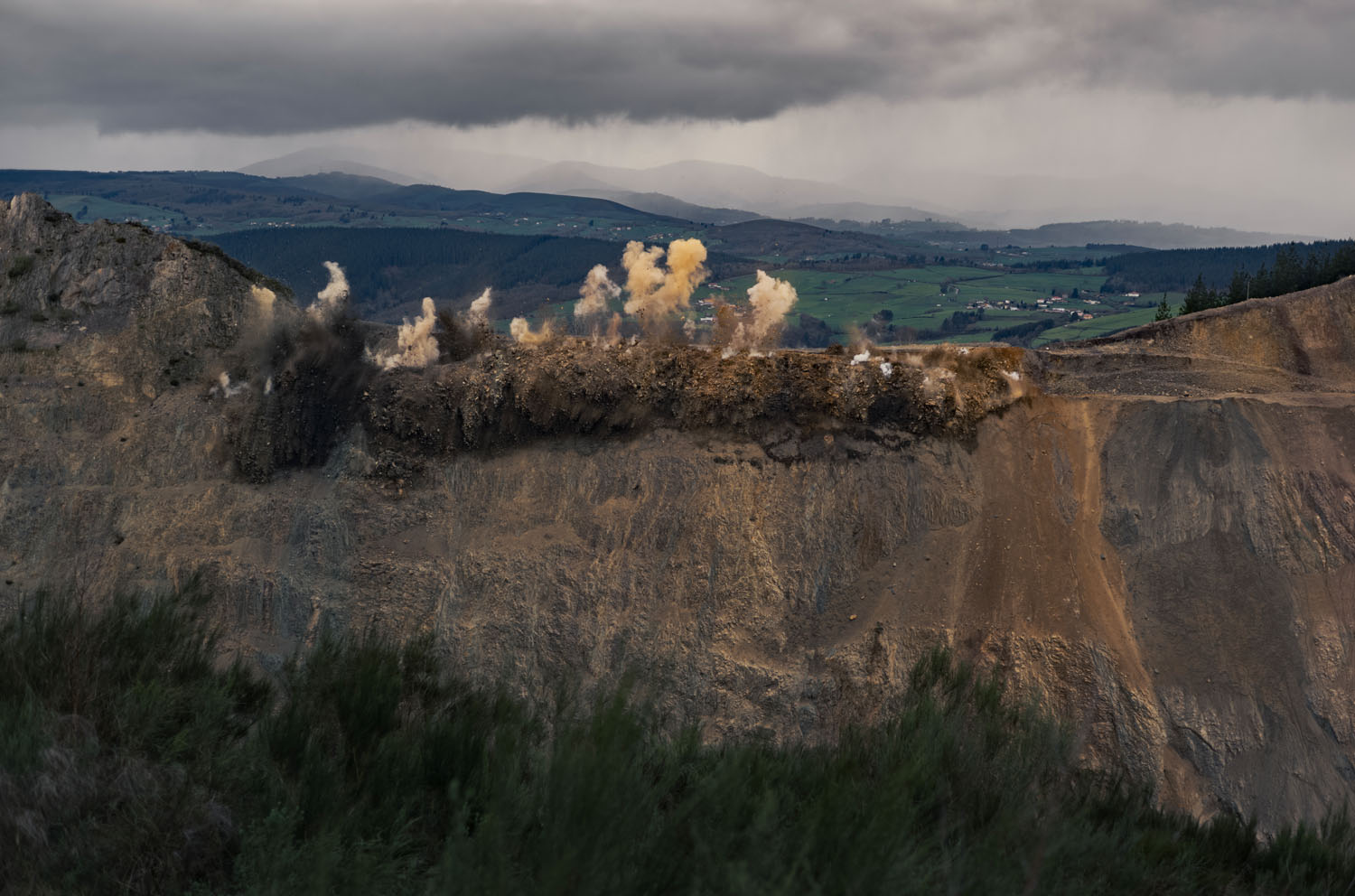
Series of explosions at the top of a mined mountain
A controlled explosion during the environmental restoration of the Buseiro open-pit mine. Tineo, Asturias, February 2024.
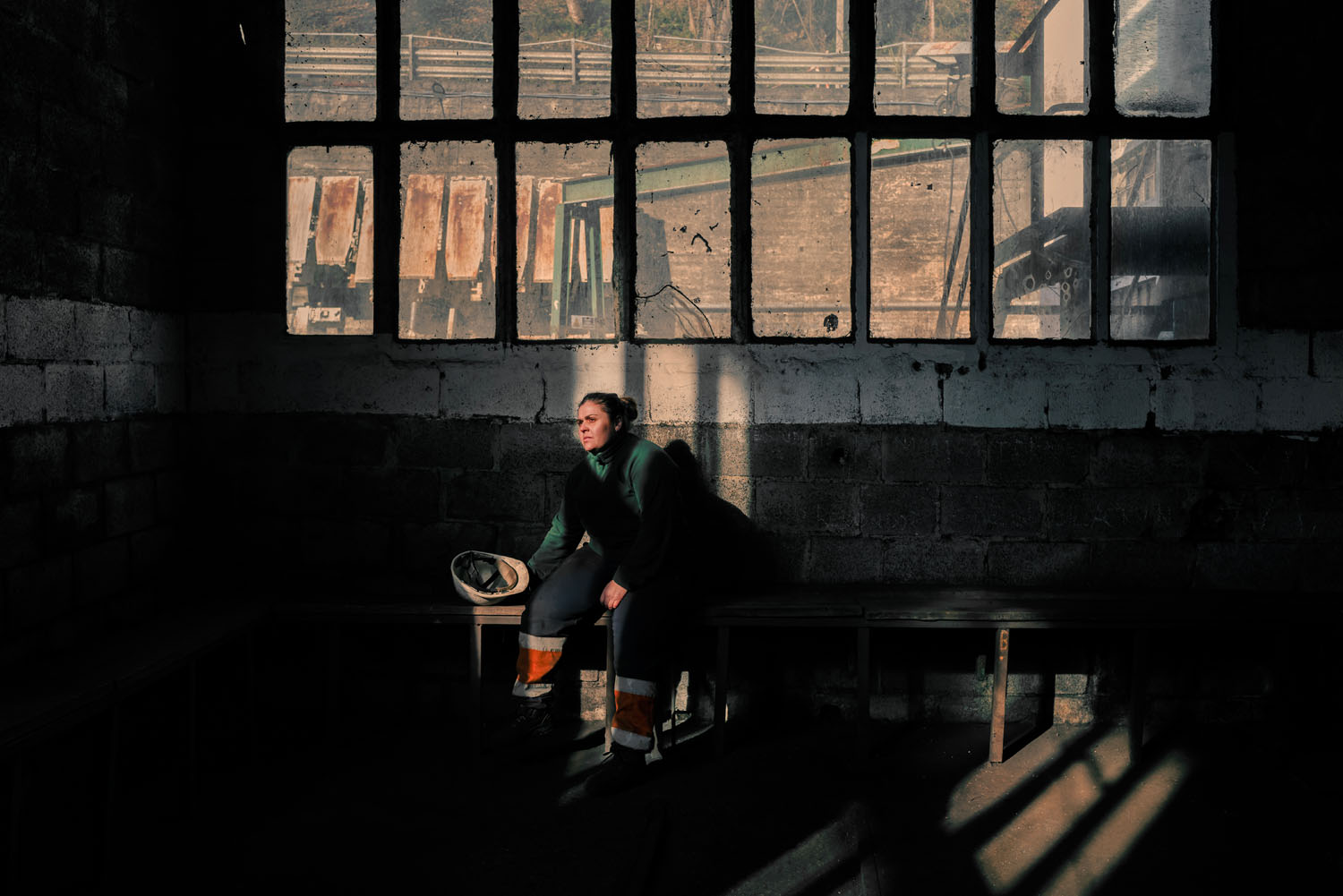
Women sits in an industrial space
Thais Mellado Fernández waits at the entrance to the San Nicolás mine for the elevator that will take her down to the galleries—the underground tunnels where coal is extracted. Fernández began working as a miner at the age of twenty-one under the condition of “absolute preference,” a hiring priority given to applicants with family ties to miners who were killed on the job (Fernández’s father was killed in the San Nicolás mine). Mieres, Spain, January 2022.
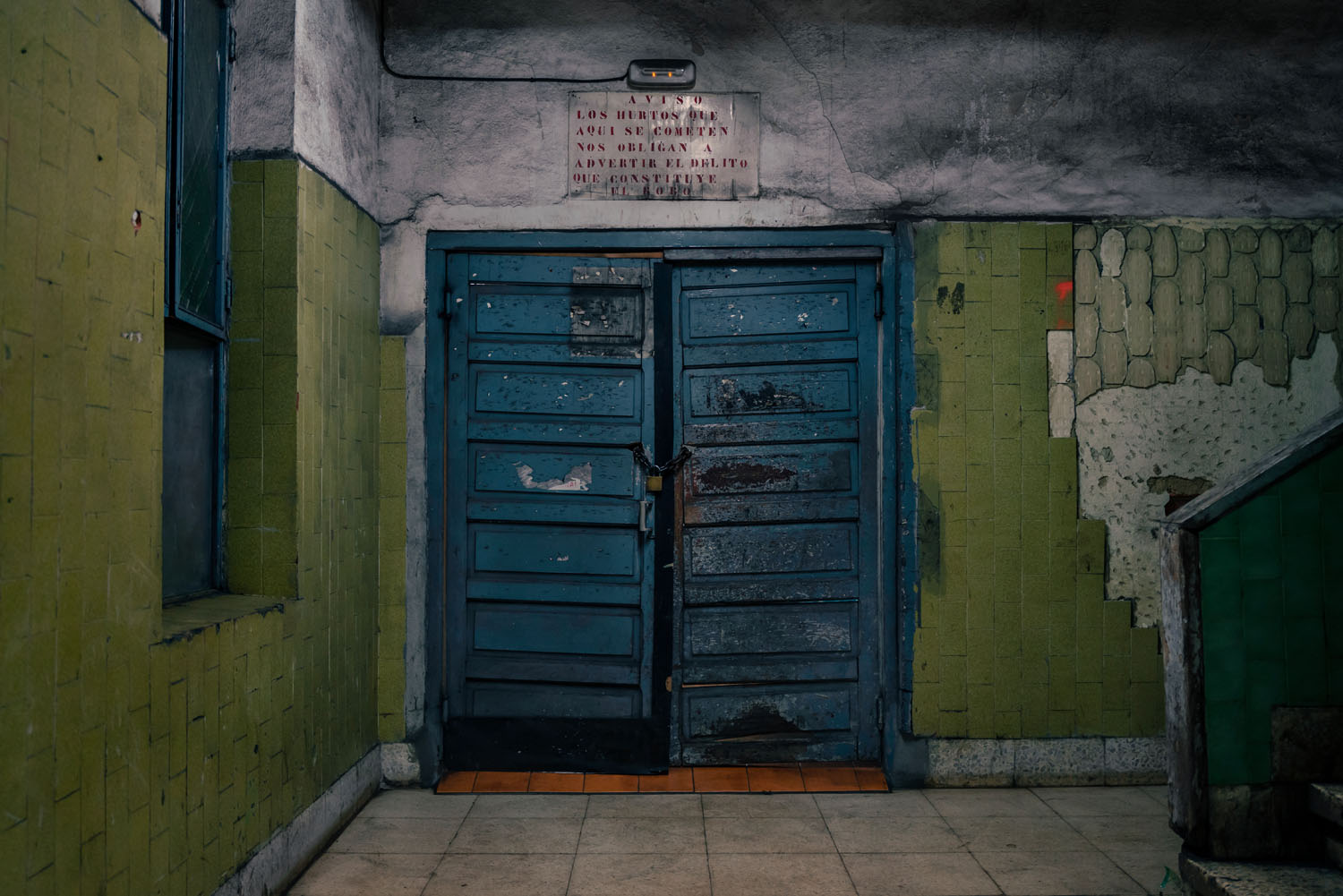
double steel doors painted blue with green walls
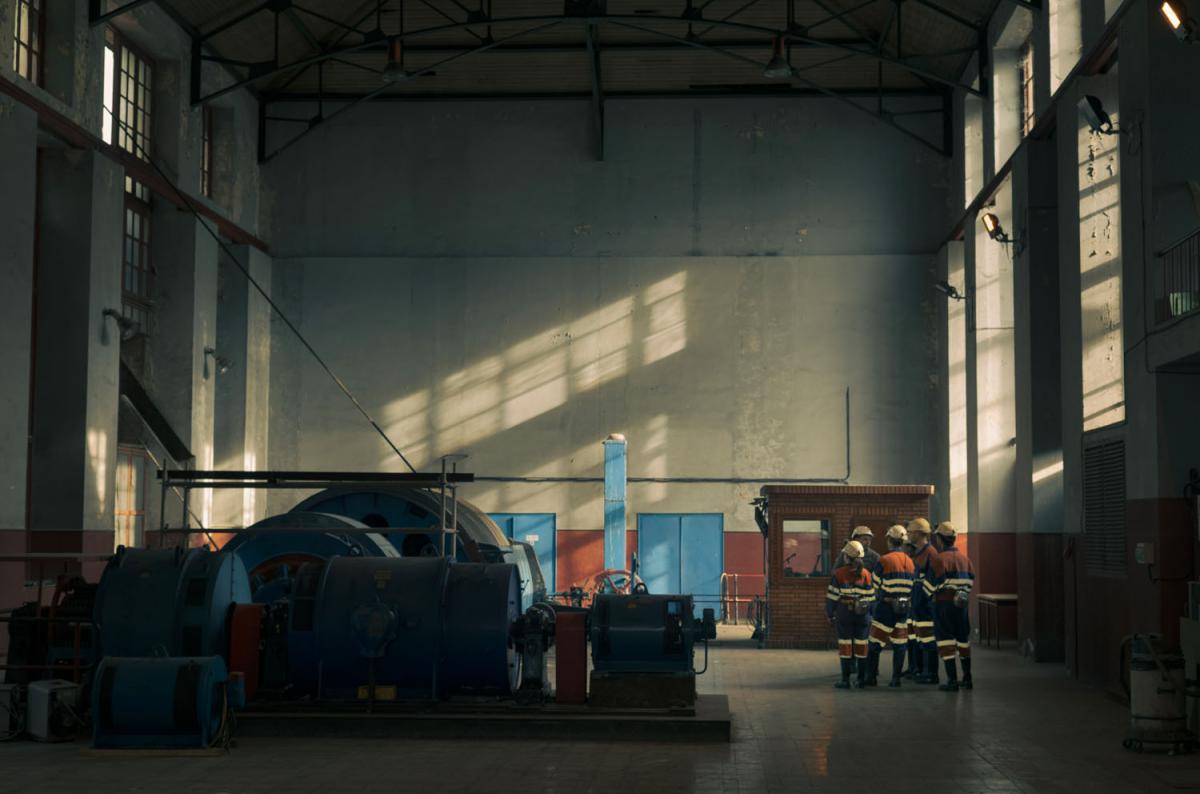
A locked entrance to the former washrooms of the San Nicolás mine. In mining infrastructure, these spaces often served as informal locker rooms where miners changed clothes and showered after long shifts underground. At its peak, the mine employed up to 1,500 workers; by the time this photograph was taken, only around 300 remained, and parts of the building had already been closed. Mieres, Spain, January 2022.

The new economies of these former mining villages leaned into that redefinition, transforming portions of the closed mines into museums, such as the site of Pozo Sotón, where visitors can descend into a six-hour tour of the mine itself. Other projects included converting sites into cultural and performance spaces. Some mines were flooded as part of new geothermal systems. Remarkably, thanks to a government program that has rehabilitated thousands of acres, kiwis and apples grow on land that was once the site of massive pit mines.

Plenty of risks and rewards have accompanied Spain’s commitment to renewable energy. In 2019, the government launched a program known as the “Just Transition,” which incentivized early retirement, offered job training for new skills, and provided investments in cottage industries as well as funding for environmental restoration. A less concrete, though no less profound, concern was how people shaped for generations by coal would answer a fundamental question: What’s a mining town without a mine?

“This question—Who do we become now?—it’s alive. Many people in Asturias ask it, because they’re very proud of a past they have to let go of. This absence is part of the story, and, in many ways, it speaks louder than any direct testimony. It also aligns perfectly with my visual language. So when people talk to me about what came before and what comes after—for me, I try to resist these binary narratives, because what interests me is the in-between where loss and possibility coexist.”
Image
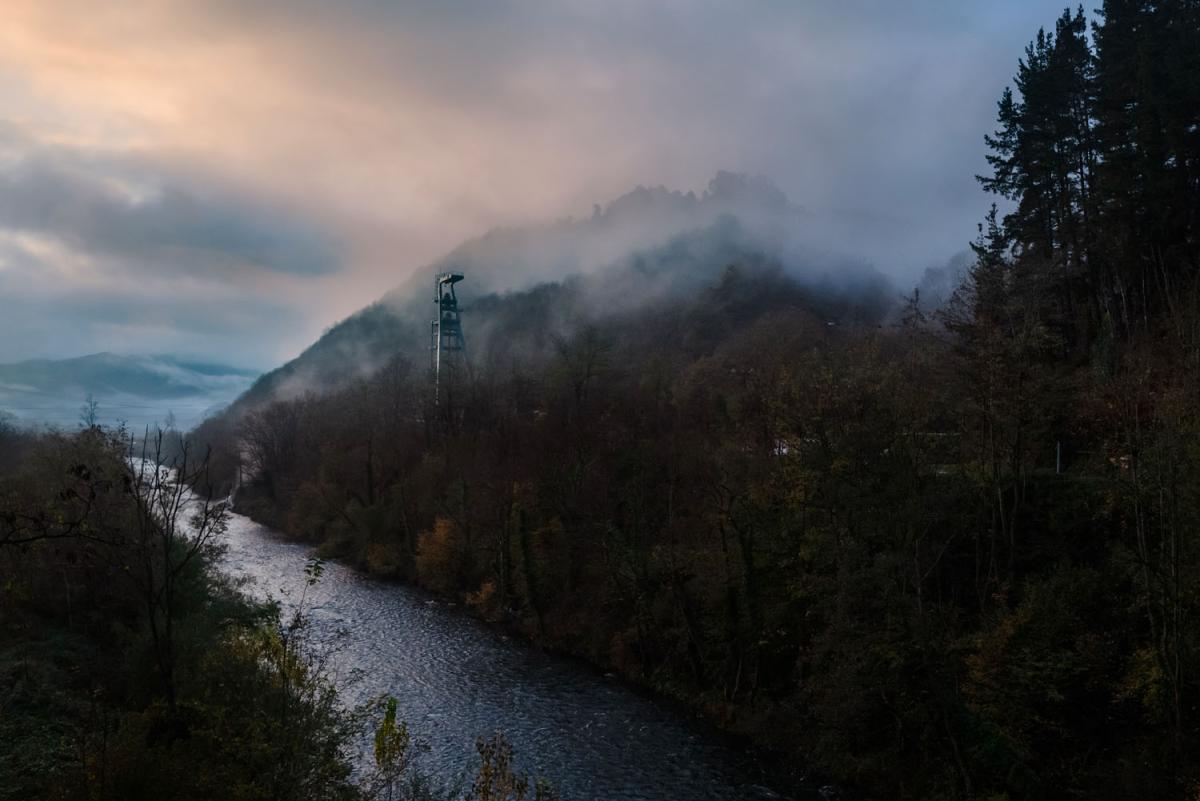
River running across the photo with mountains rising on both sides
The headframe of the Carrio coal mine, which closed in 2018 after seventy years of operation. The structure supported the hoisting system used to raise and lower miners and coal from underground. The Nalón River, which once ran black from industrial runoff, flows clear today. Asturias, Spain, November 2020.
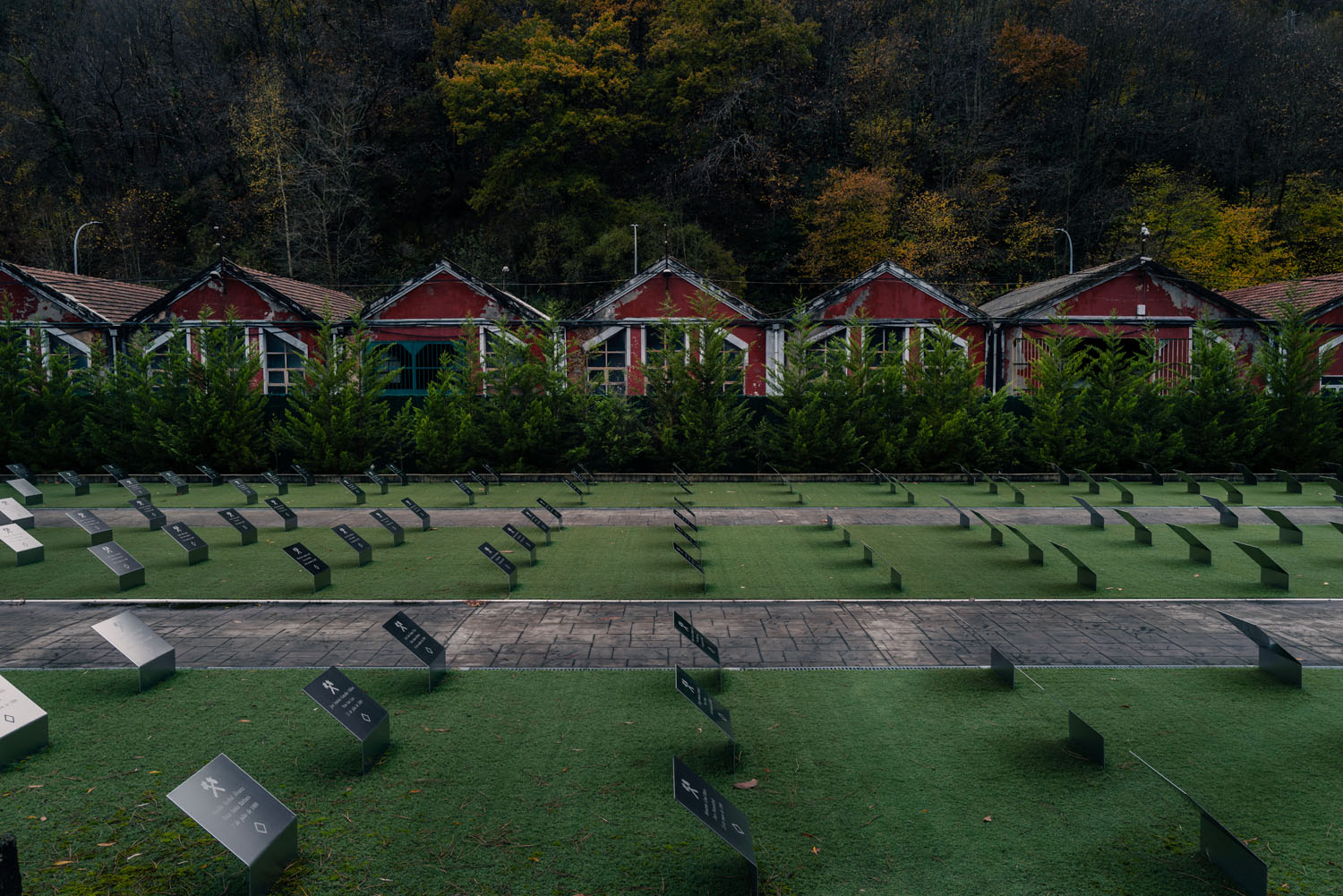
Uniform placards on the ground, evokes the impression of a cemetary
The Pozo Sotón Mining Memorial pays homage to the thousands of miners who died while working in coal mines across Asturias as a result of accidents and the occupational hazards linked to underground mining. Asturian coal mining was one of the most dangerous industrial activities in twentieth-century Spain. San Martín del Rey Aurelio, Spain, December 2021.
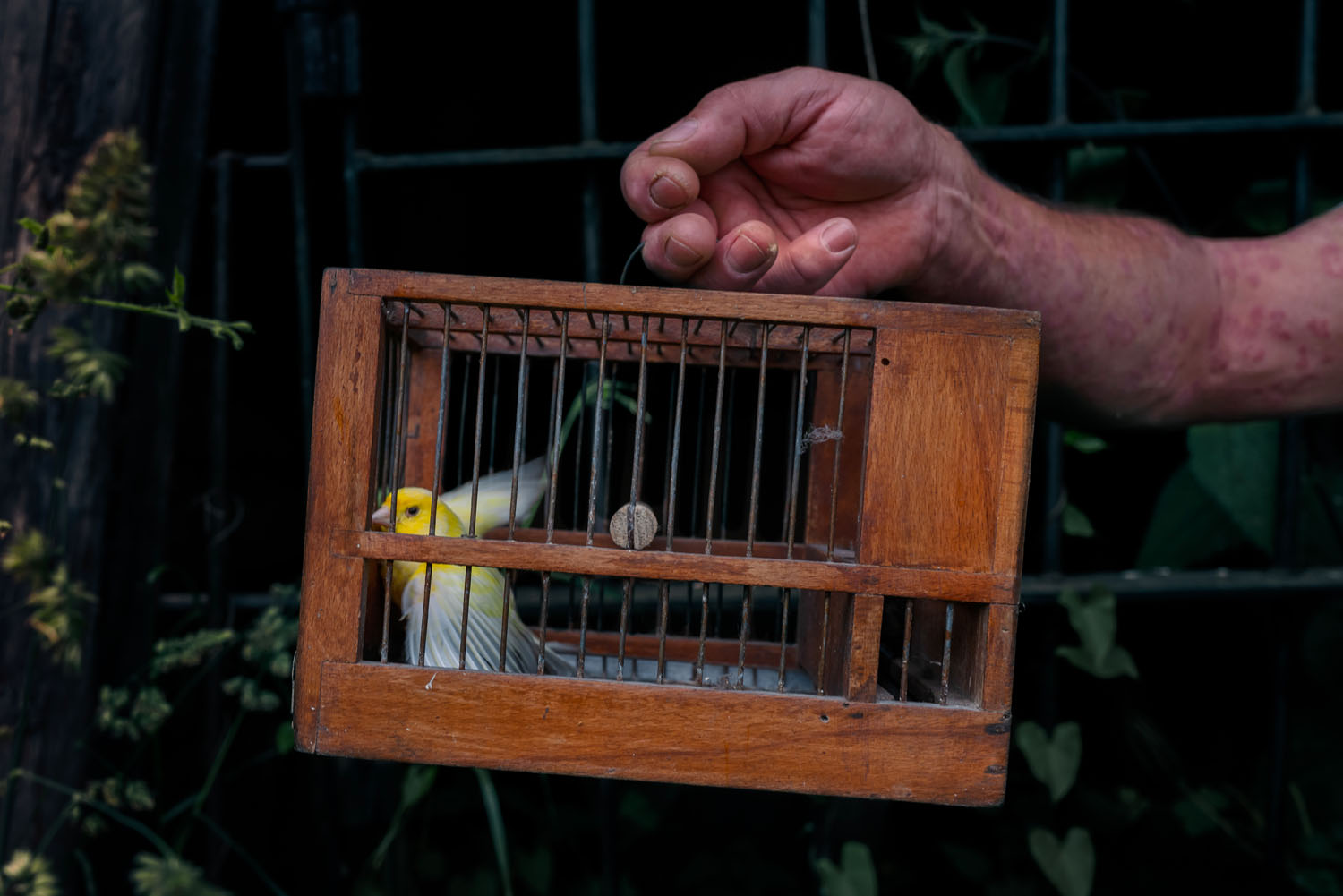
a white and yellow canary being carried in a small wooden cage
Former miner Oscar Iglesias and his canary at the entrance to the San Nicolás mine. For decades, miners carried canaries underground as an early warning system: The birds are far more sensitive than humans to dangerous gases. If a canary showed signs of distress or died, miners would immediately evacuate the mine. Canaries remain a powerful symbol of risk, vigilance, and memory in the Asturian mining basin. Mieres, Spain, June 2022.
Image
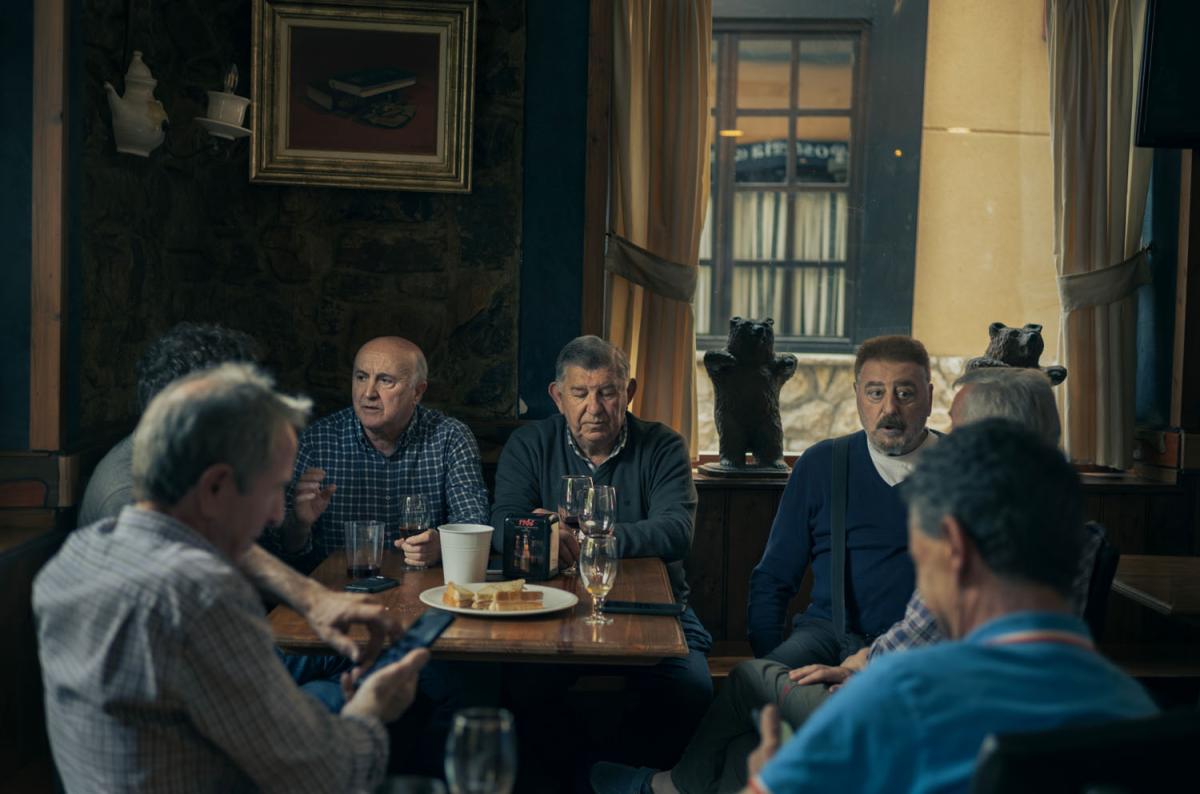
7 men sitting around a restaurant table
A group of former miners, now members of the El Maravayu Association, gather at a village bar in Asturias. The association is dedicated to the protection and restoration of local rivers, including the repopulation of trout, environmental stewardship, and the preservation of fishing traditions in the region. Asturias, Spain, June 2024.
Image
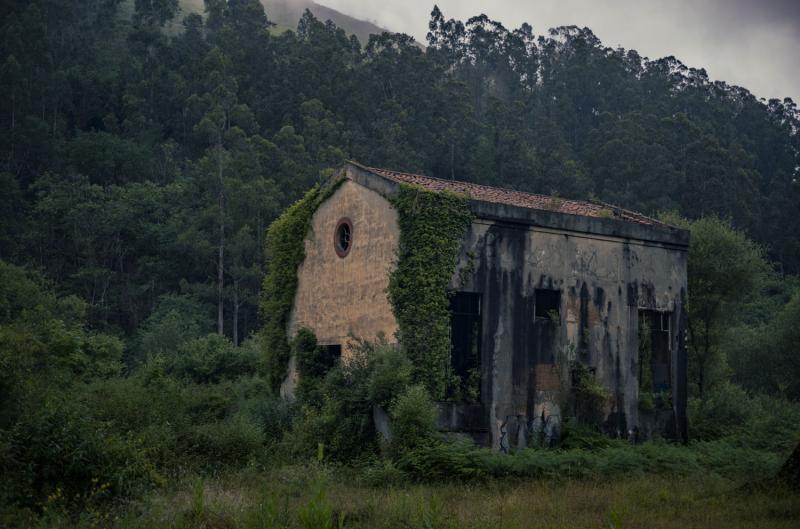
Large, multistory stone structure with ivy growing on it in a lush green landscape
The engine room of Pozo Llamas, which closed in the late 1980s. Ablaña Valley, Asturias, June 2024.
Image
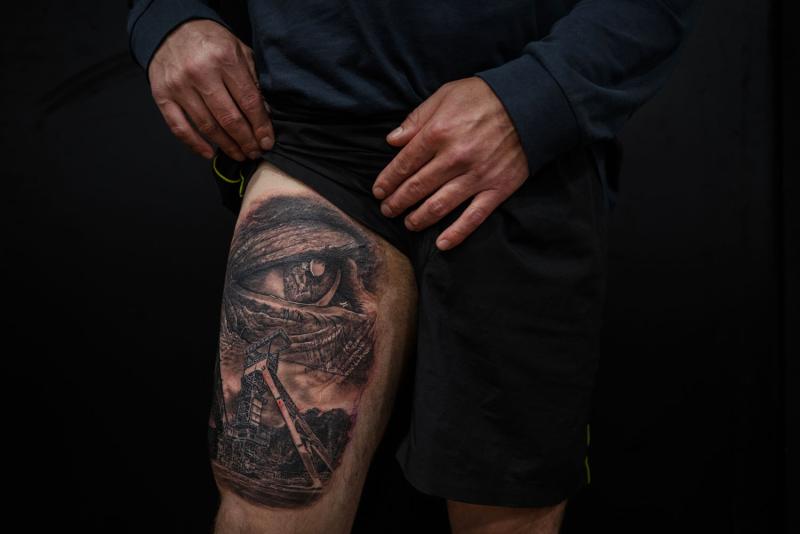
Large thigh tattoo over a man's quadricep. The tatto is an eye above a man digging coal.
José Manuel Guerra worked at the San Nicolás mine. This tattoo is a tribute to Monsacro, the first mine where he worked, photographed shortly after the tattoo was completed. Mieres, Spain, June 2022.
Image
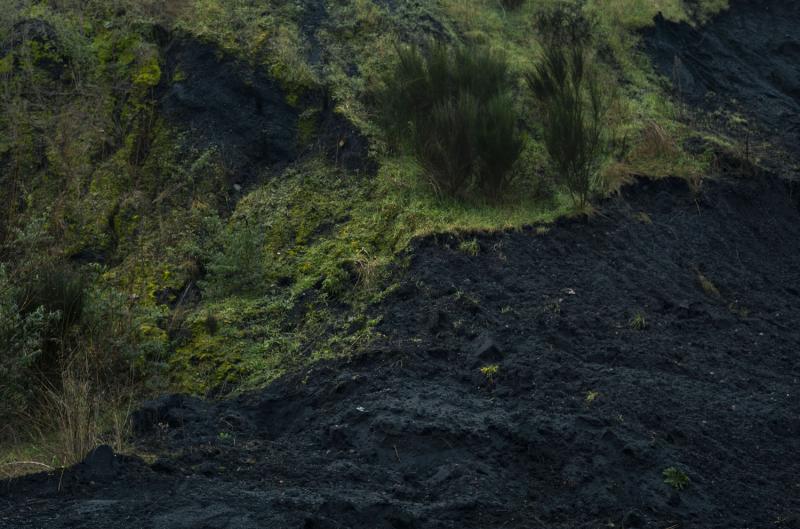
upper left is vibrant, green grass and bottom right is rich, black soil
The former coal yard of the Narcea Thermal Power Plant, in Soto de la Barca, is gradually being reclaimed by vegetation. Soto de la Barca, Asturias, February 2024.
Image
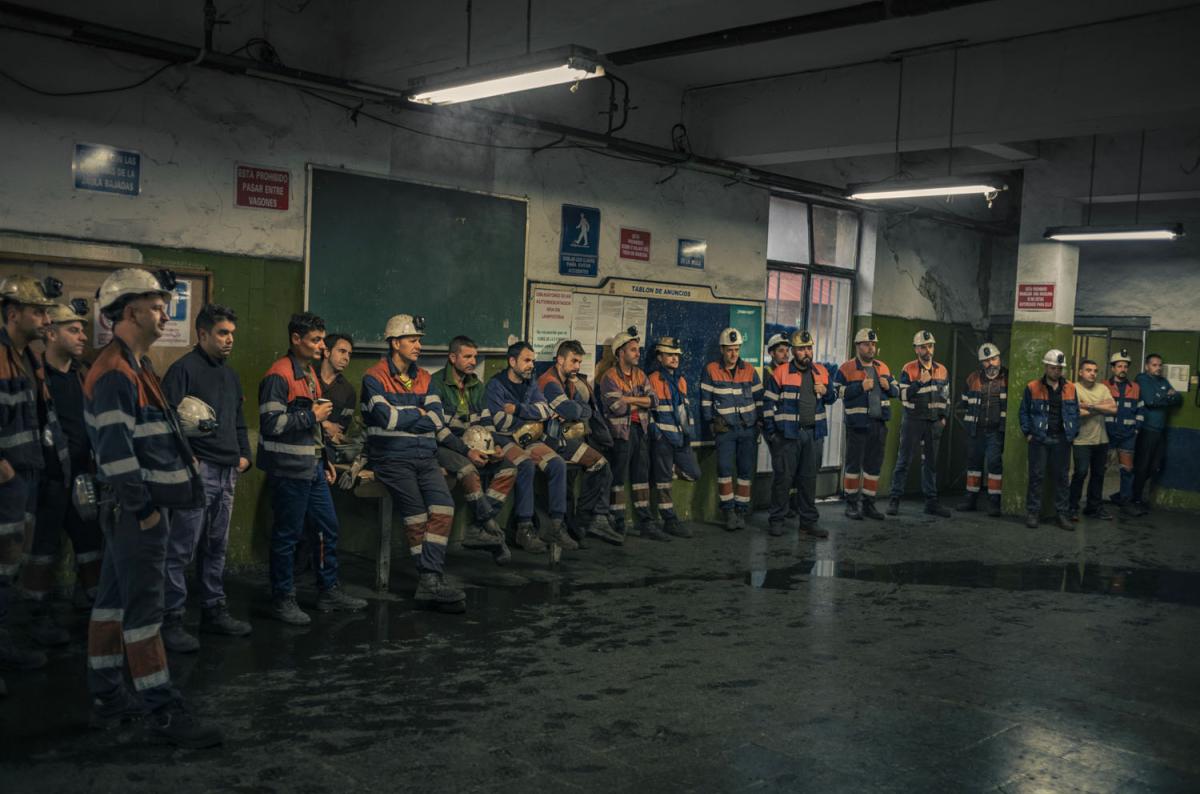
About 20 men in uniform line the perimeter of a room, appear to be listening to someone out of frame
A meeting in the lamp room of the San Nicolás mine, where members of the mining union gather to discuss negotiations with HUNOSA (Hulleras del Norte S.A.), the state-owned coal mining company, regarding the imminent closure of the mine. Mieres, Spain, June 2024.
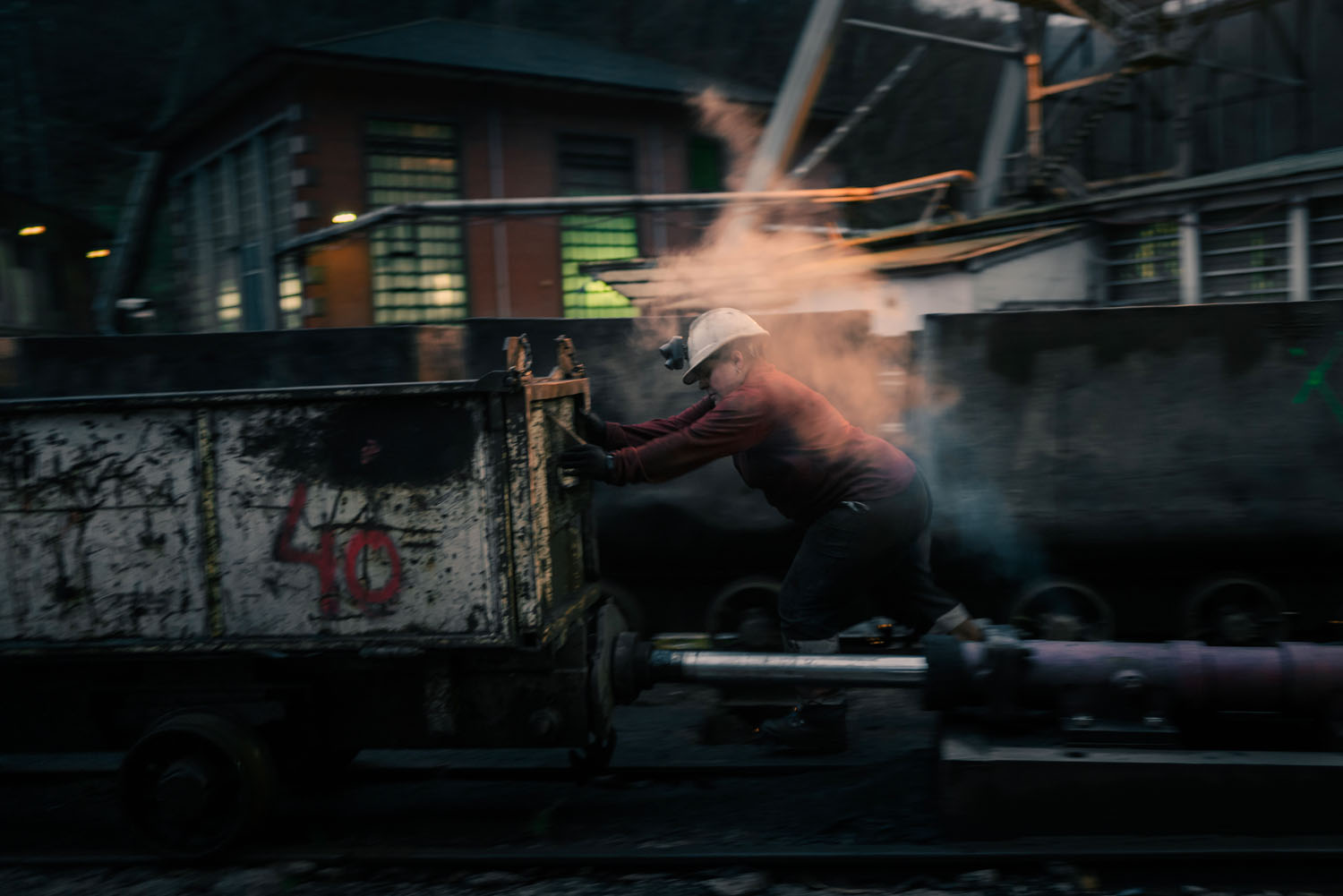
A coal miner pushing a large metal cart, it appears heavy
Thais Mellado Fernández pushes a cart at the San Nicolás mine, the last coal mine in Spain to shut down. Mieres, Spain, January 2022.
Young adults hanging in the foyer of a nightclub
La Carbonera, one of the few bar-discos still open in Mieres. Mieres, Spain, April 2022.
Image
a handful of people in uniform in a large cavernous industrial space
Visitors at the Sotón Mine Museum, a coal mine converted into an educational and cultural center, are given miners’ gear before descending underground for an hours-long guided tour. San Martín del Rey Aurelio, Asturias, Spain, June 2024.
people walking in the street during a festival, many wearing red and black flannels
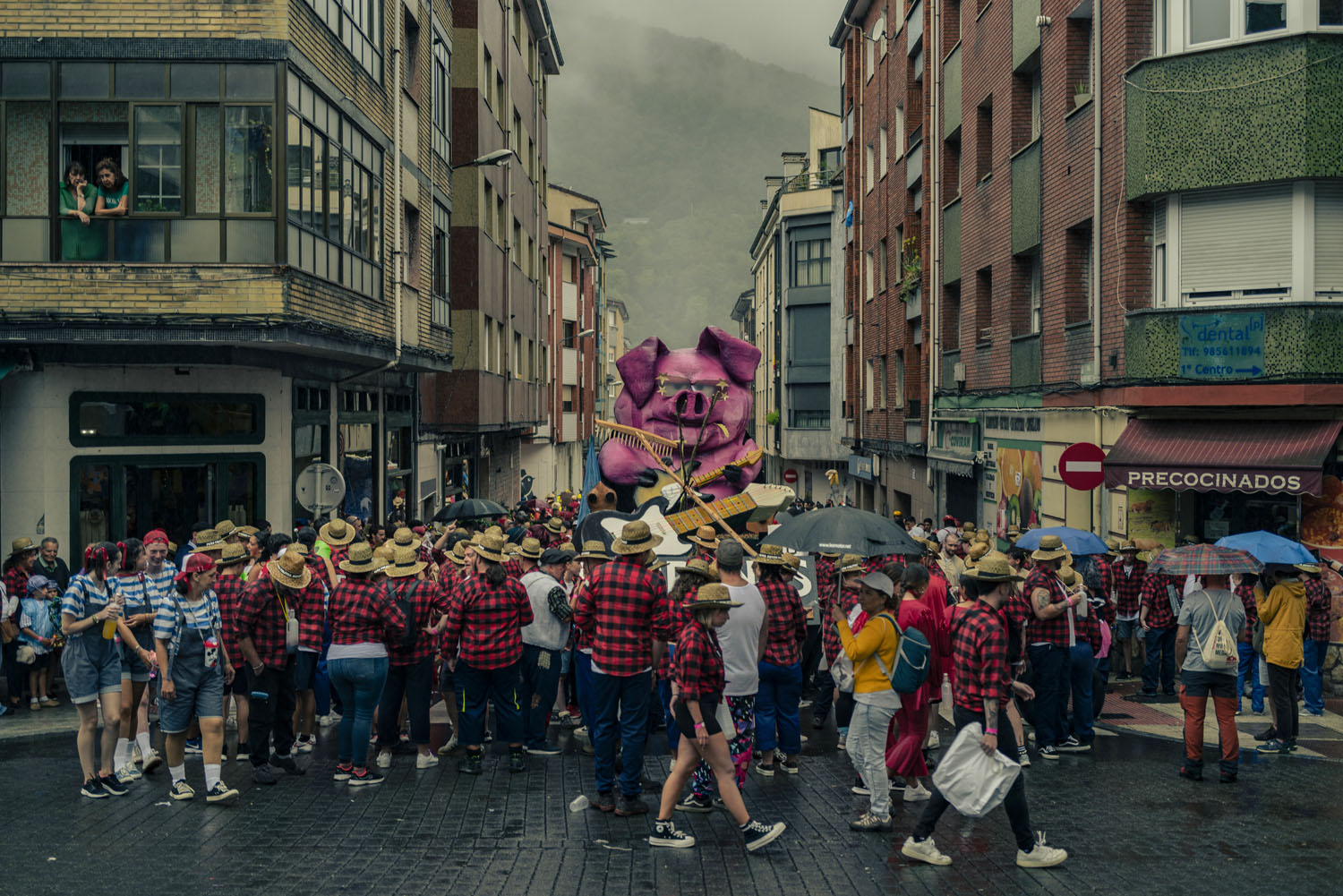
The Descenso Folklórico del Nalón in Laviana, an annual summer festival in which costumed participants build handmade boats to carry to the Nalón River, celebrating local folklore, creativity, and community traditions. Laviana, Asturias, Spain, August 2024.
a women's hands making jewelry
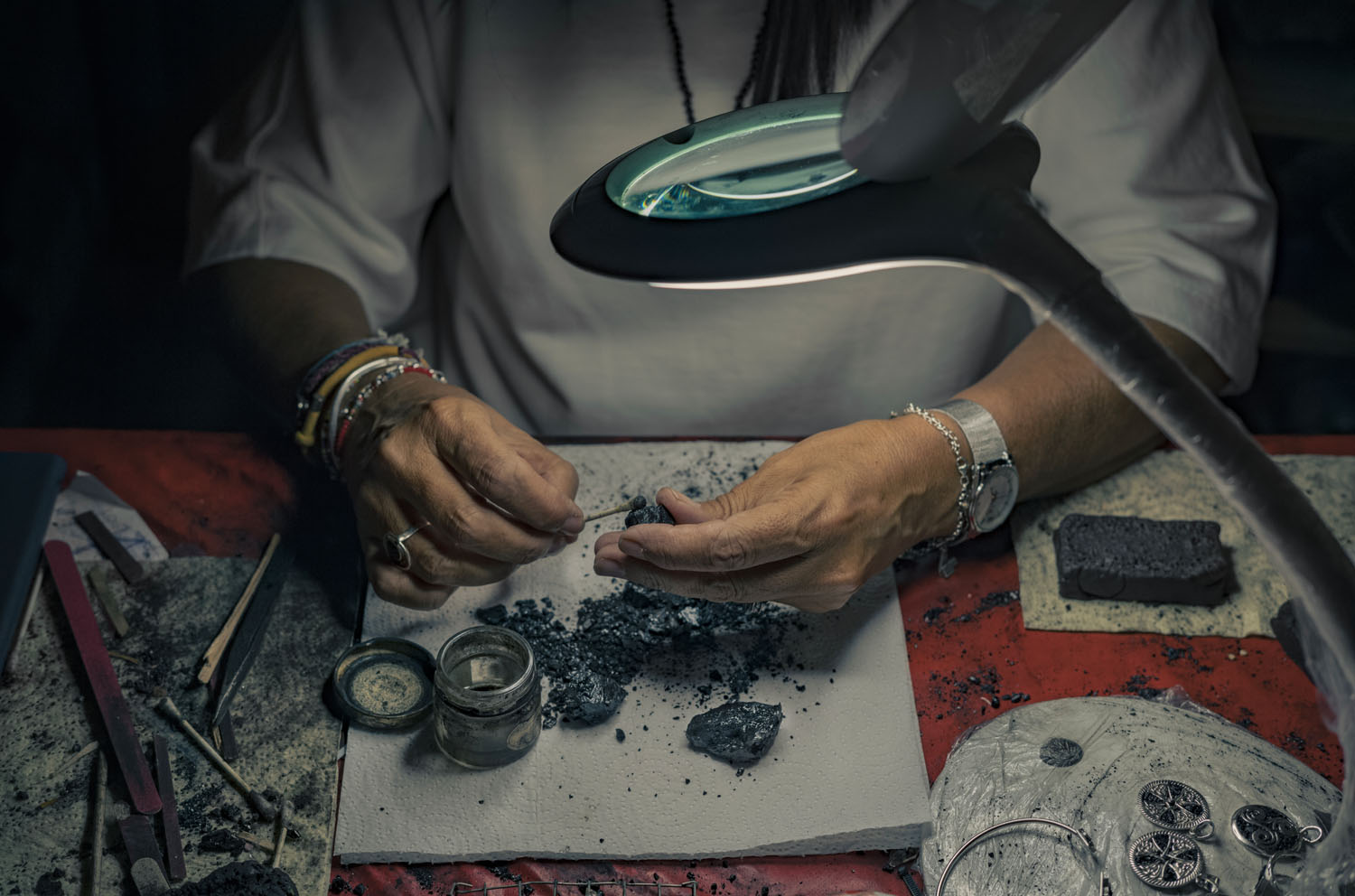
Marta Vaquero works on a ring made with coal. She and her husband, Alfredo Asensio, have designed several jewelry collections that highlight the emblematic mineral of the mining regions and Asturias. Turón, Asturias, October 2024.
8 men singing in a choir in hard hats with headlamps lit and blue coveralls
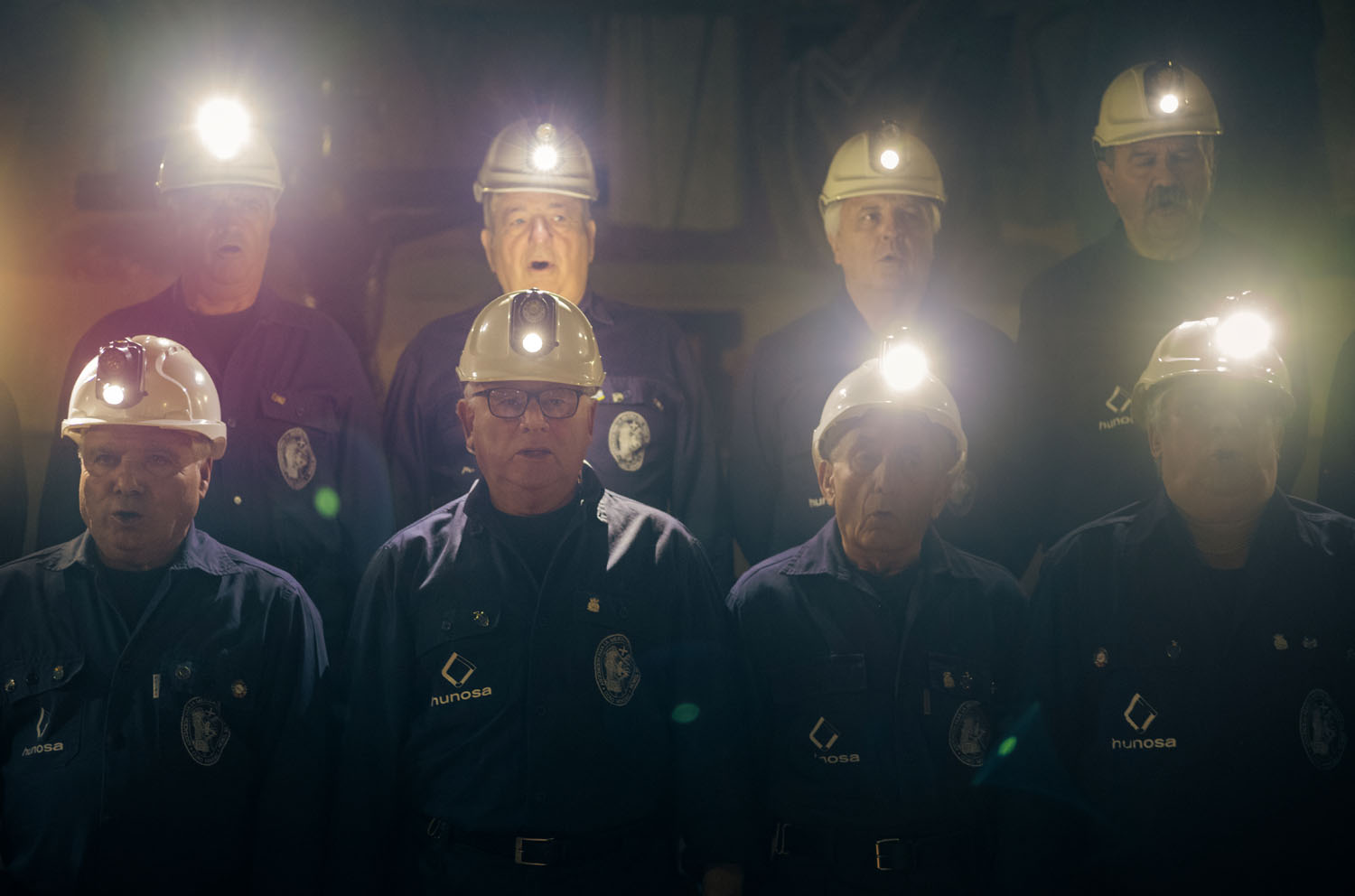
The Turón Mining Choir singing in the Parish Church of San José during village festivities. The choir, made up of former miners, often performs songs that honor the mining history and culture of the region. Turón, Mieres, Spain, September 2024.
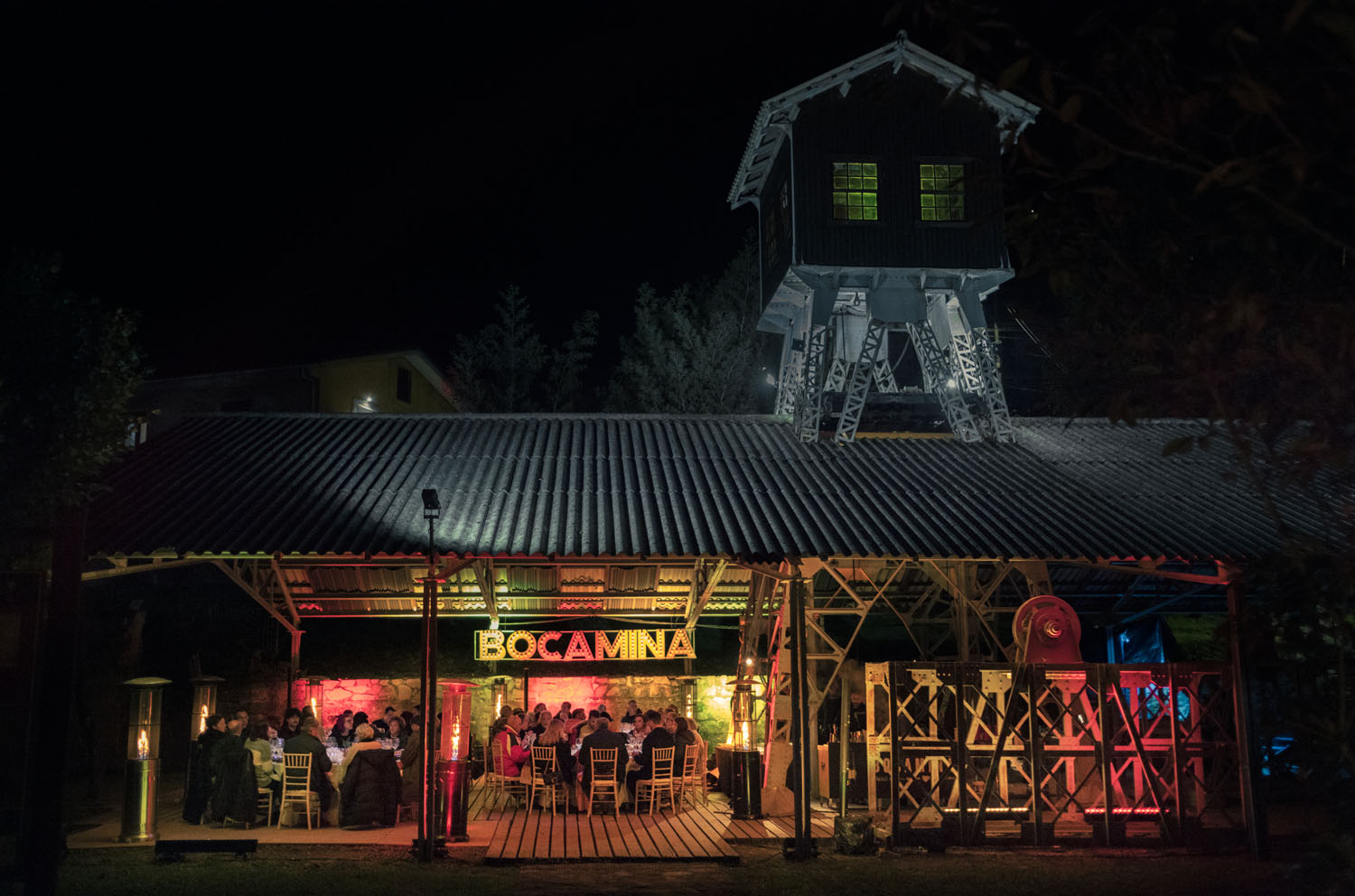
Dinner is served at an open air venue with a rooftop
Bocamina, a contemporary gastronomic project set inside the former Espinos mine, where traditional Asturian cuisine is served amid the remains of the region’s mining heritage. Turón, Mieres, Spain, October 2024.
Image
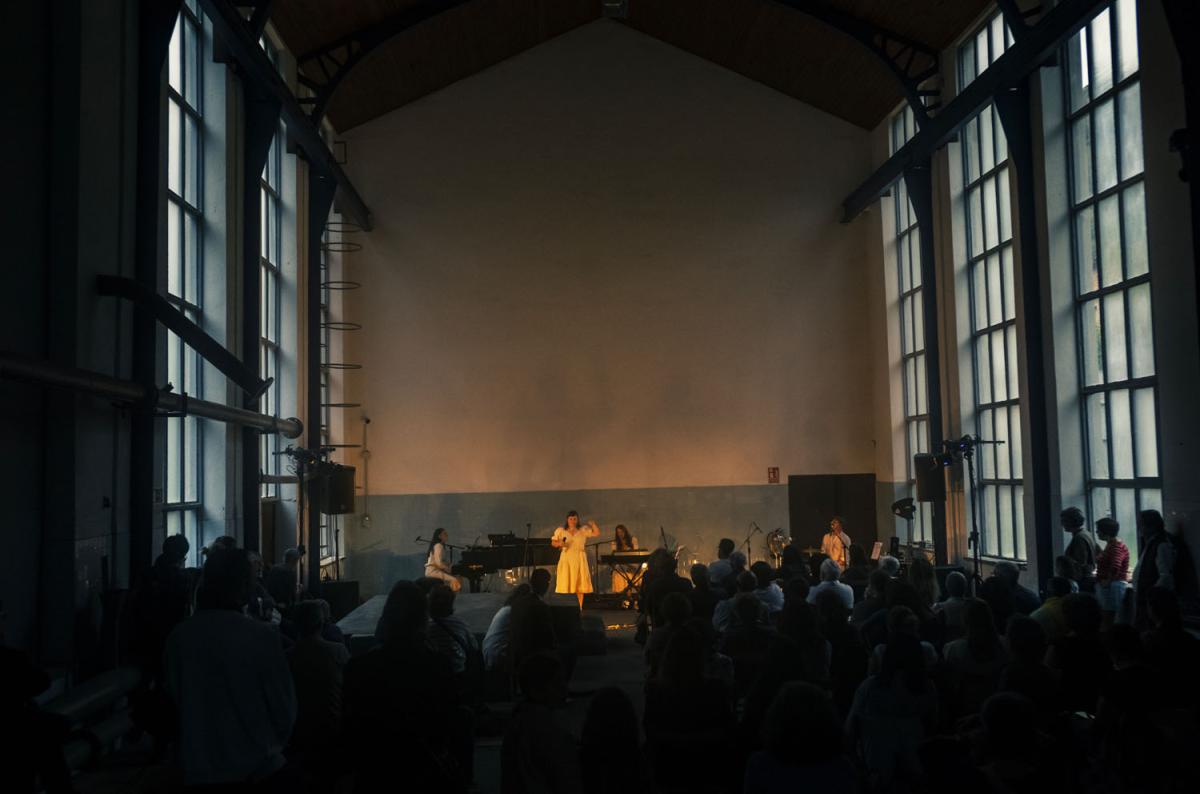
Woman on stage singing in a large hall with a high ceiling
Mapi Quintana performing a concert at the Santa Bárbara Mine in the Turón Valley, once one of the most important coal mines in Asturias. After closing in 1995, the site was converted into a cultural center. Asturias, Spain, October 2024.
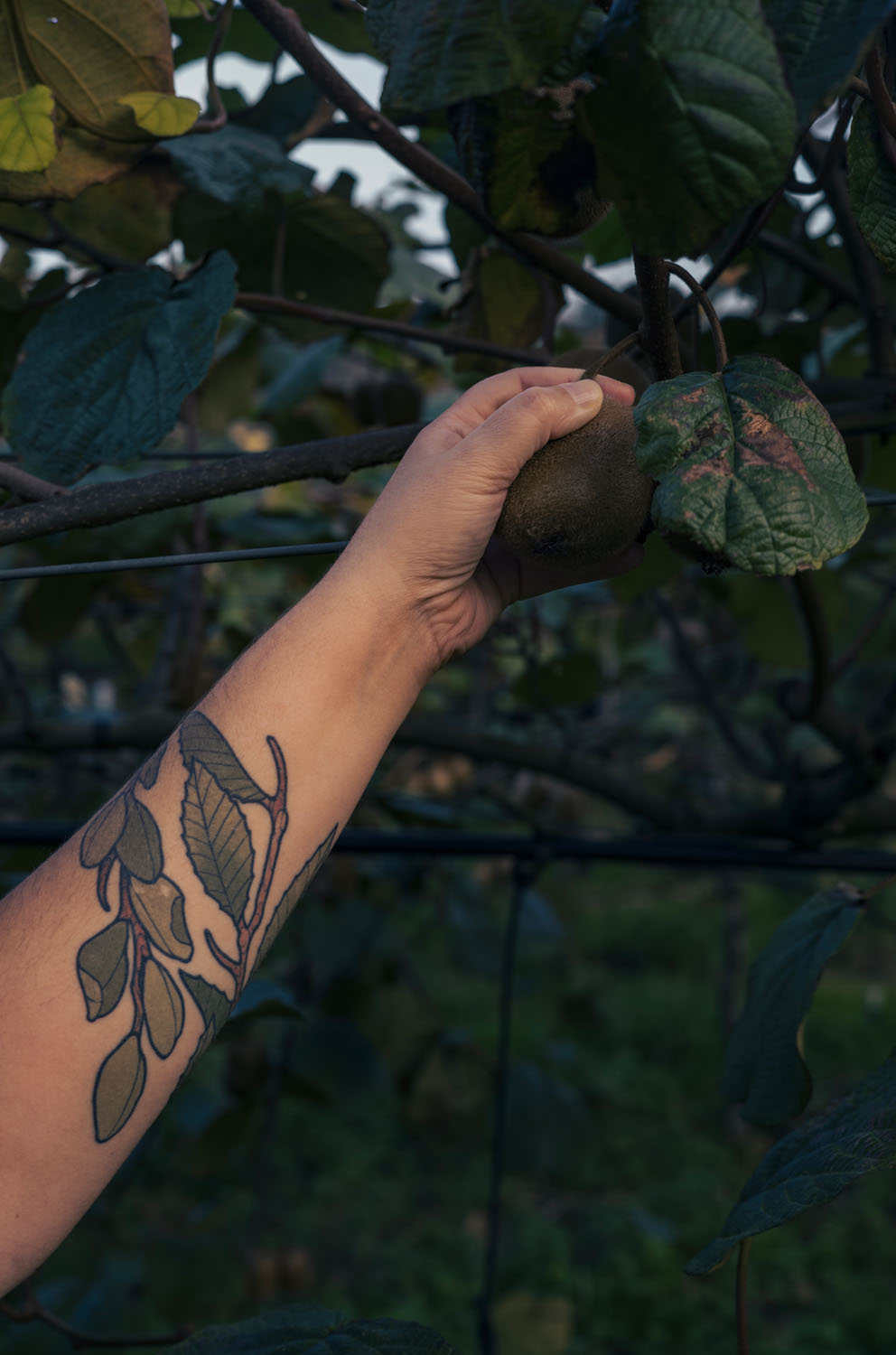
Arm reaching to harvest a kiwi
Saray harvesting kiwis at her family’s farm, Finca La Matona, located on the rehabilitated site of a former open-pit mine. Langreo, Asturias, October 2024.
Image
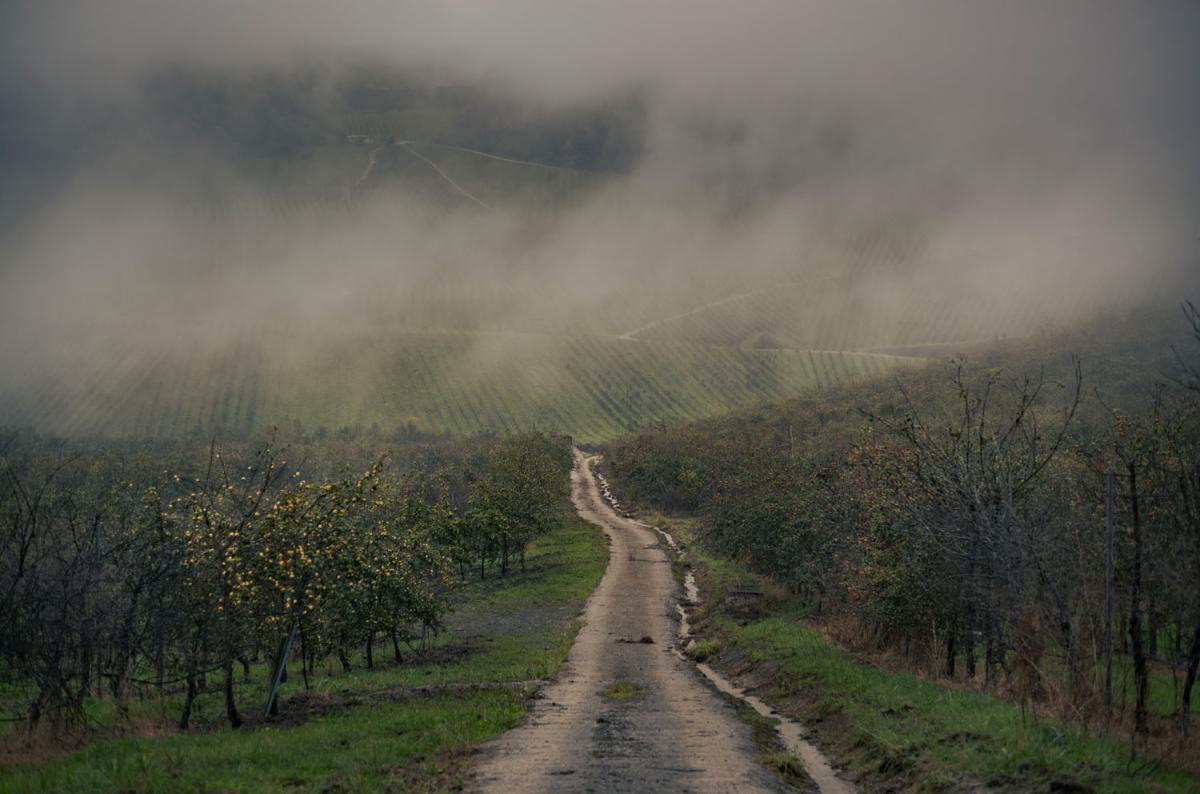
Kiwi orchard in fog
Image
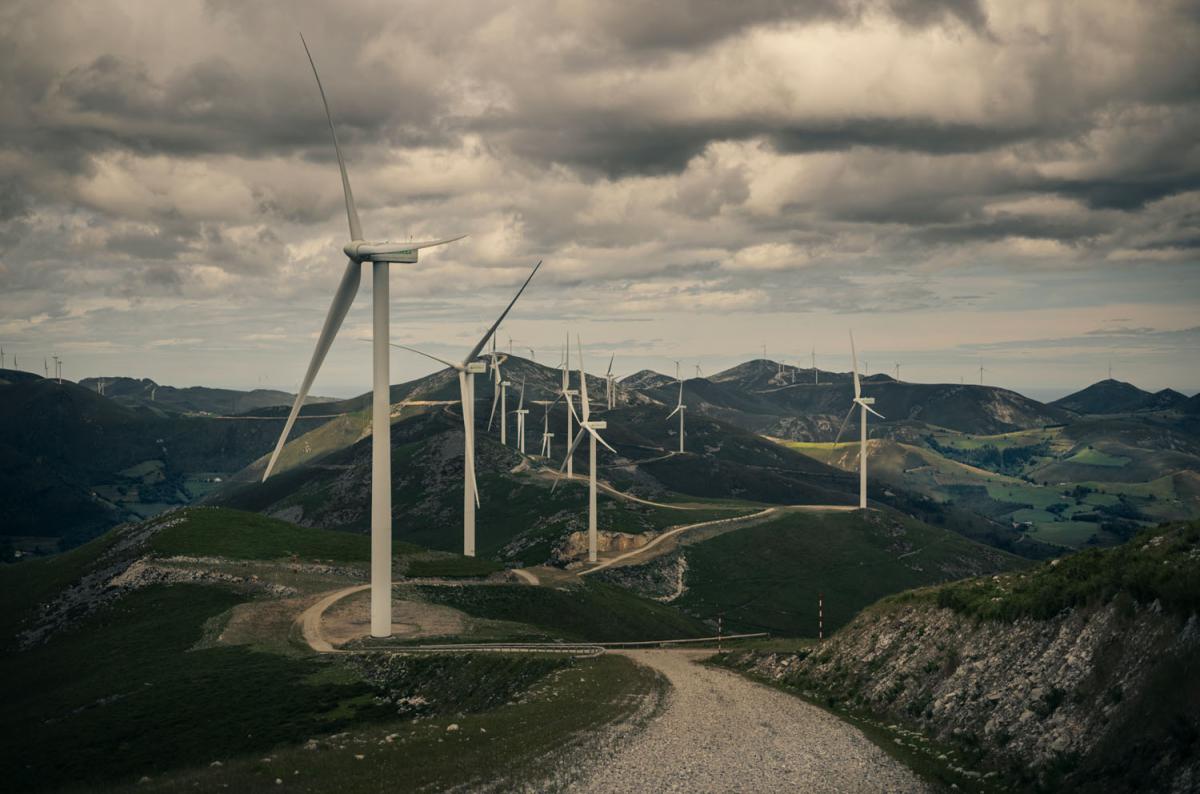
Wind turbines on top of mountain
The Cordel-Vidural Wind Farm. Asturias, Spain, January 2024.
Share —
Published: April 24, 2026

Lys Arango is a Spanish documentary photographer based in Marseille, France. She is a National Geographic Explorer and a member of Agence VU’. Her work has been published and exhibited internationally and has received several awards, including Pictures of the Year and the Prix Terre Solidaire.